
Sex Offender Checks in Jim Hogg County
The Texas Public Sex Offender Registry is the main official public channel for Jim Hogg County. Texas DPS runs it under Code of Criminal Procedure Chapter 62. Ordinary searches are free and do not require an account. The portal supports both name and location or map routes, which helps when the reader knows a person, an address, a ZIP code, or only the county.
The registry is a specialized public-safety database. It is not a general rap sheet or a list of every person with a sex-offense case. Chapter 62 reporting rules determine who must register, what becomes public, how long the duty lasts, and what data remains protected. Results should be read as current registry profiles, then checked against their displayed registration and compliance facts.
The official DPS criminal-history search help explains a separate credit-based name product.
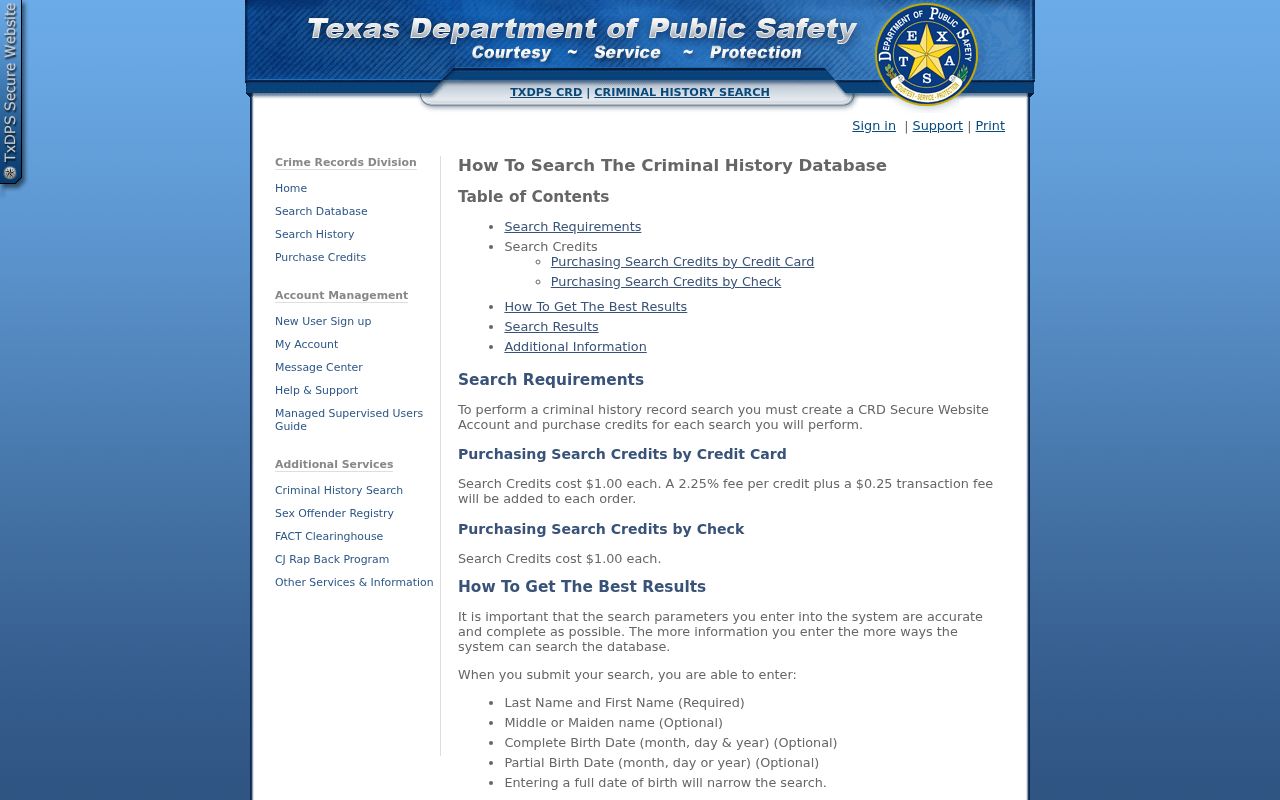
That screen is useful for seeing the difference between a paid conviction-name search and the free Texas registry. The two products answer different questions.
Jim Hogg County Registry Sheriff Role
Jim Hogg County has no incorporated city, so there is no Hebbronville city police registry desk. A person with a local registration duty generally reports to the Jim Hogg County Sheriff as the local law-enforcement authority. DPS guidance says registration occurs no later than the later of seven days after arrival or the first date local policy permits. The sheriff has not posted separate appointment hours or a registration-only phone number.
Call (361) 527-4140 before going to 211 E. Galbraith Street in Hebbronville. Confirm the appointment channel and what identification or paperwork the office requires. The address's Hebbronville mailing label does not create a city government. Residents across Hebbronville, Las Lomitas, Guerra, and the county's other unincorporated places use county or state channels rather than a municipal registration office.
Jim Hogg County Sheriff
211 E. Galbraith Street
Hebbronville, TX 78361
(361) 527-4140
sheriff@co.jim-hogg.tx.us
No separate registry appointment hours are published. Call before visiting.
How to Search the Texas Public Sex Offender Registry
Choose the route that fits what is known. A full name can narrow a person search, while an address and radius show nearby registered locations. County and ZIP filters are useful for broader Jim Hogg County awareness. Read the current form's required markers and offered radius values because live controls can change.
- Open the Texas DPS registry and choose a name search or a location and map search. Review the portal's current terms and field prompts.
- Enter the strongest known facts. Use last, first, and middle name for a person, or address, city, ZIP, county, and radius for a place-based search.
- Review the list or map without relying on one matching fact. Compare the public identity, physical description, location, and offense data in the full profile.
- Read the risk, registration, supervision, and compliance details as separate fields. For moves across jurisdictions, add the national NSOPW search.
| Field | Type | Required | Use |
|---|---|---|---|
| Last, First, Middle Name | Text | Mode-dependent | Name-search route |
| Address | Text | Mode-dependent | Location route; normalize the street address |
| City | Text | Optional | Hebbronville can be entered as mailing-city text |
| ZIP | Text | Optional | Use a known local ZIP such as 78361 |
| County | Dropdown | Optional | Select Jim Hogg |
| Radius | Dropdown | Address mode | Read the live distance options |
| Map or List | View controls | No | Switch between geographic and listed results |
The DPS registry search form shows these official name and place controls.
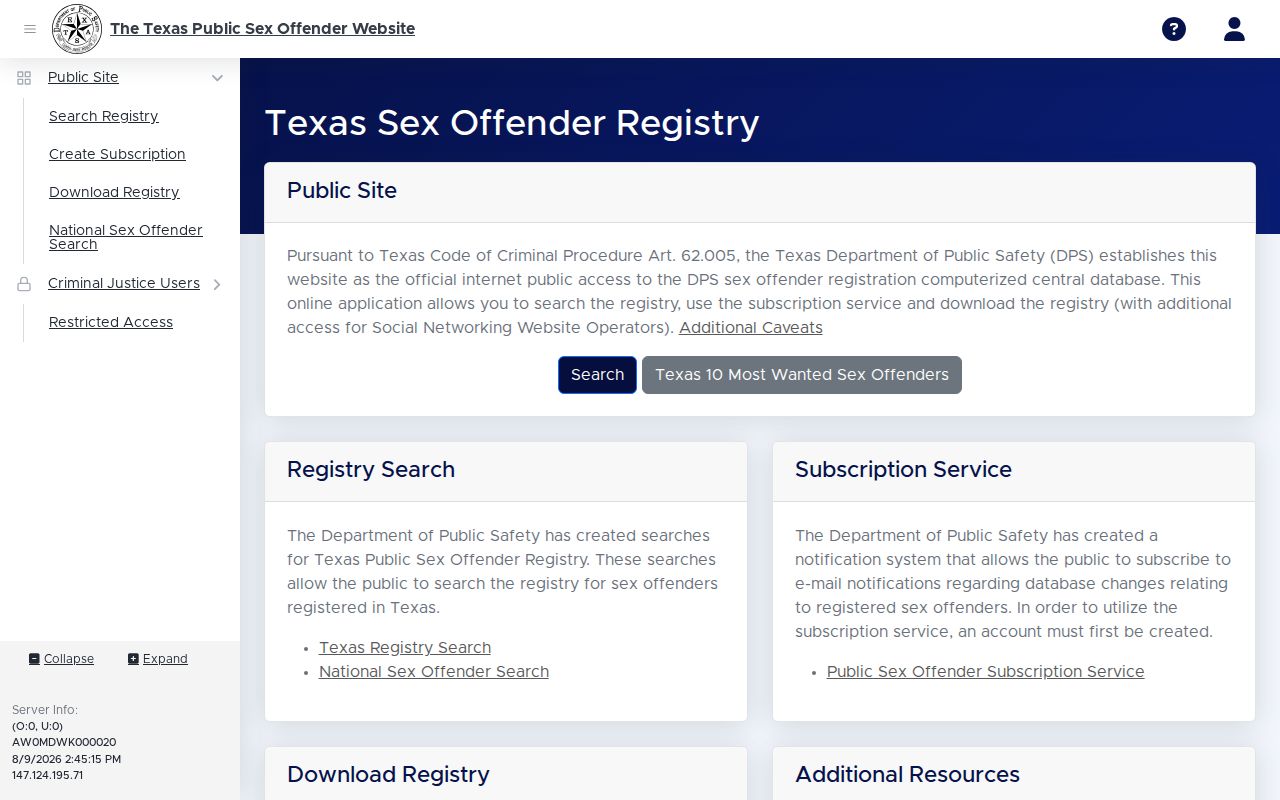
The neutral interface gives Jim Hogg County readers a starting point without republishing any registrant's name or photograph.
Jim Hogg County Registry Search Modes
A county filter answers a different question from a radius search. Selecting Jim Hogg returns records categorized to the county within the portal's present data. An address-and-radius search centers on a location. A ZIP search can cross practical community lines, while a name search follows a known person. These modes should not be treated as interchangeable.
Address data can change. Public CRD accounts support free subscriptions for moves within an address radius, moves into a ZIP code, higher-education campus events, and changes or removal tied to an individual address. Triggered notices are sent by nightly email. A subscription adds notice after the first search, but it does not replace a fresh portal review when an immediate safety decision is needed.
Note: Jim Hogg County location results should be checked by both county and address context because postal place names do not mark municipal boundaries.
Inside a Registry Profile
A Texas public registry profile combines identity, location, offense, supervision, and compliance information. Not every field will appear in every record. The presence of a public photo or address comes from Chapter 62's publication rules, not from permission to copy, shame, or confront the person shown.
| Identity | Name, aliases, date of birth, sex, race, and physical descriptors such as height, weight, eyes, hair, and shoe size |
|---|---|
| Photograph | The current public registry image made available by DPS |
| Location | Home address or detailed geographic location and map context as the law permits |
| Offense | Offense type, victim-age category, conviction date, and punishment |
| Risk and status | Numeric risk label, supervision or release status, compliance data, and civil-commitment designation when applicable |
| Other public fields | Relevant higher-education institution and specified vehicle details when present |
The official registry profile interface groups these details for public review.
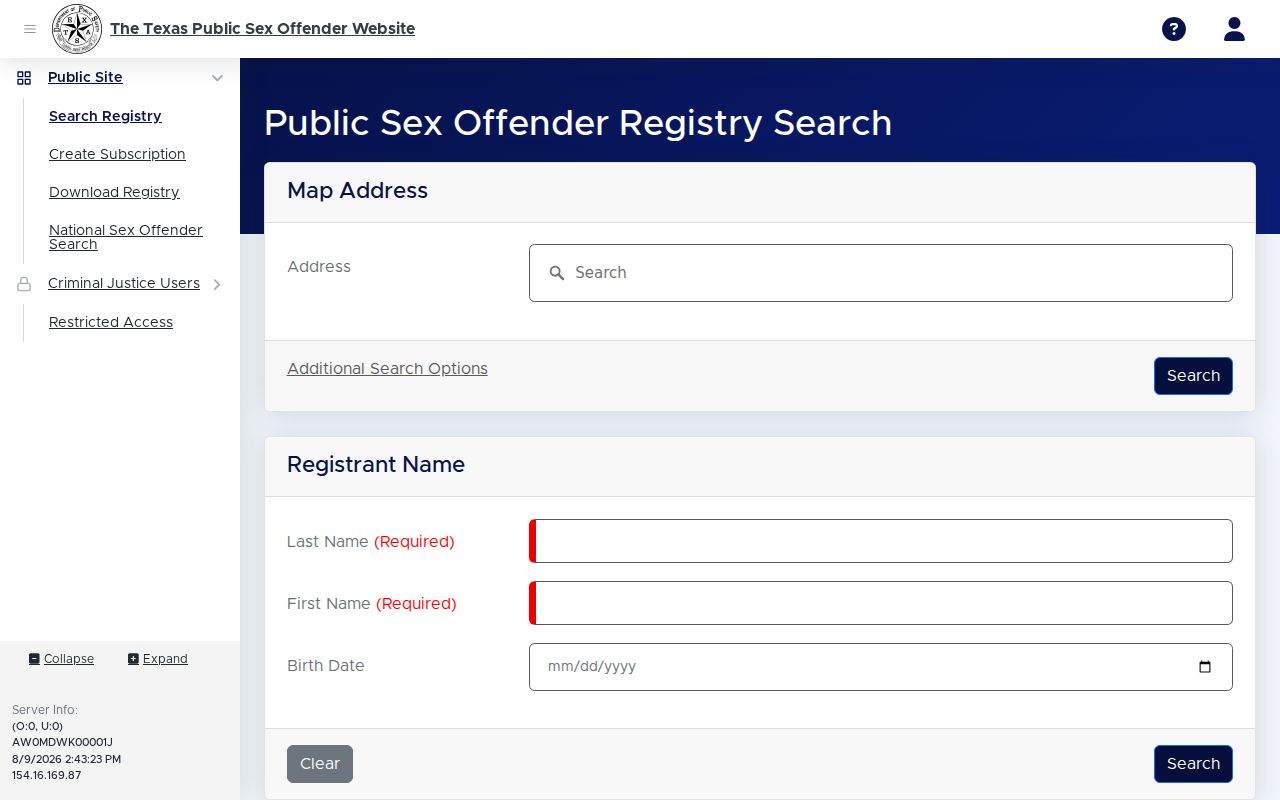
This neutral interface view shows the record structure while keeping the focus off any individual registrant.
Jim Hogg County Registry Protected Fields
DPS deliberately keeps several facts off the public profile. Social Security numbers, driver's-license numbers, home and work phone numbers, mobile numbers, online identifiers, and employer names, addresses, and phones are not public registry fields. Victim-identifying data is also protected. DPS-added fields and juvenile registration ordered nonpublic remain outside ordinary public view.
That boundary matters when a field looks blank or absent. It may be protected by law rather than missing from the agency's internal file. A registry profile also does not supply the underlying police narrative, all court pleadings, or a nationwide criminal history. For a court outcome, use the clerk's case file. For a cross-state public registry check, use NSOPW as a separate layer.
Texas Registration Levels and Requirements
Texas uses low, moderate, and high numeric risk labels, plus a separate civil-commitment designation. These are not the federal SORNA tiers. Most important, the risk label alone does not set the registration term. Duration follows the reportable offense, history, and the relevant release, discharge, community-supervision, or juvenile endpoint under Chapter 62.
| Texas category | Duration | Verification |
|---|---|---|
| Low | Life or ten years under the offense rule; the label does not decide | Annual unless another statutory category applies |
| Moderate | Life or ten years under the offense rule; the label does not decide | Annual unless another statutory category applies |
| High | Life or ten years under the offense rule; enhanced notice does not decide duration | Annual unless the two-offense rule applies |
| Two or more sexually violent offenses | Controlled by the qualifying offense and history | Every 90 days |
| Civil commitment | Separate court designation with special consequences | Every 30 days |
Adult registration is generally for life or ten years after the later relevant endpoint, depending on the listed offense and history. Juvenile rules generally use ten years from disposition or completion, whichever is later, subject to nonpublic or deregistration rulings. A person moving generally gives in-person notice no later than seven days before the intended move and registers with the new Texas authority within seven days after arrival. Failure to comply is a felony.
The DPS registry FAQ puts registration rules beside the state's criminal-history fee and fingerprint information.
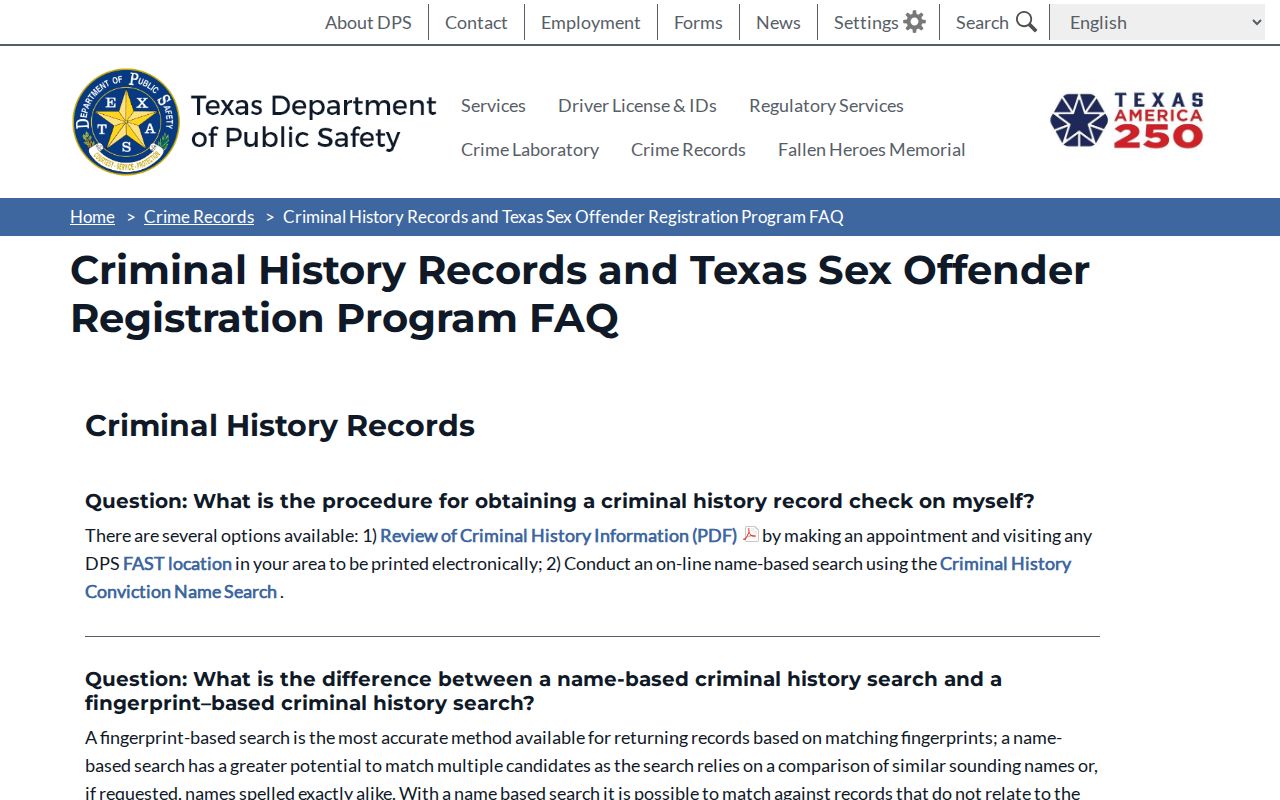
The page helps distinguish registry duties from a public conviction-name check or a fingerprint-based self-review.
Jim Hogg County Registry Alerts
The local sheriff handles registration and verification, while DPS runs statewide public access and subscriptions. Texas also uses school notice when required, permitted publication, and DPS postcards when a high-risk or civilly committed person moves into a community. The exact Jim Hogg County appointment method should be confirmed by phone because the sheriff posts no dedicated registration schedule.
Texas does not impose one blanket statewide residency-distance rule. A parole or community-supervision condition, or a valid local rule, can still restrict a specific person. No Jim Hogg County-specific ordinance was located in the official research. Do not infer a legal violation merely from a point on the map. Check the person's displayed status and report a concrete concern to the authority that can verify it.
Community Notification and Lawful Use
Registry data supports personal and family safety, neighborhood awareness, and fact-based planning. It does not authorize contact, threats, harassment, vigilantism, or discrimination. Suspected noncompliance should go to the Jim Hogg County Sheriff at (361) 527-4140 or DPS Sex Offender Registration at (512) 424-2800 or TxSOR@dps.texas.gov. Let trained officials check the duty, status, and current record.
Misuse warning: Texas Code of Criminal Procedure Chapter 62 governs registry information and duties. Misusing public data to harass, threaten, intimidate, or pursue vigilantism is unlawful and can be a crime. Use the record only for lawful safety and community awareness.
High-risk status can prompt enhanced community notice, but it does not prove a new offense or set the registration term by itself. The same care applies to a compliance label. Read the profile's fields, dates, and category together, and send concerns to law enforcement rather than acting on an assumption.
Jim Hogg County National Registry Search
The U.S. Department of Justice National Sex Offender Public Website searches participating jurisdictions. It is the right added layer when a person may have lived outside Texas or when a location search sits near a state or jurisdictional line. NSOPW does not replace the Texas profile for Texas-specific risk, registration, and local contact details.
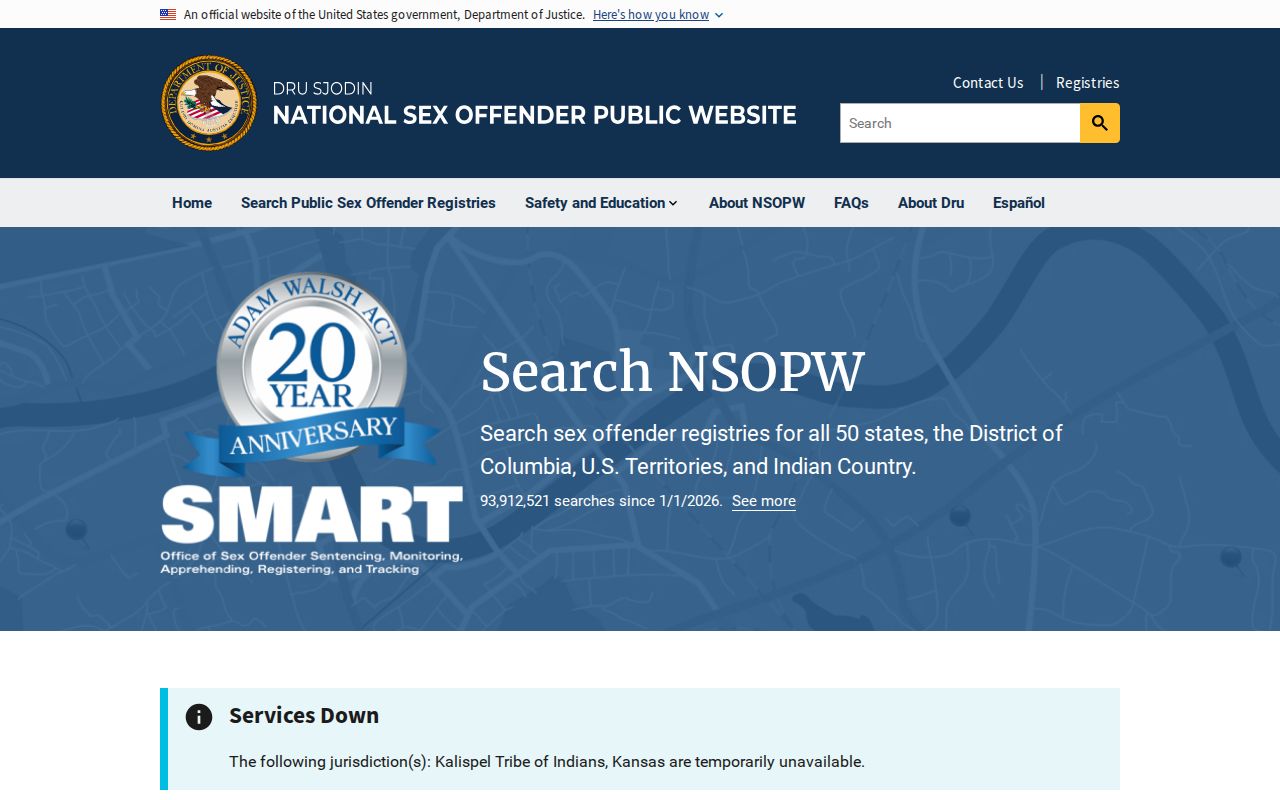
The national interface adds name and address coverage across participating registries while leaving each jurisdiction responsible for its source record.
Run both searches when the facts support it. Compare names, aliases, birth date, physical details, address, offense, and jurisdiction without assuming a same-name result is the same person. If the Texas record seems wrong, contact DPS or the registering authority. If another state's record is at issue, use the source contact shown for that jurisdiction.